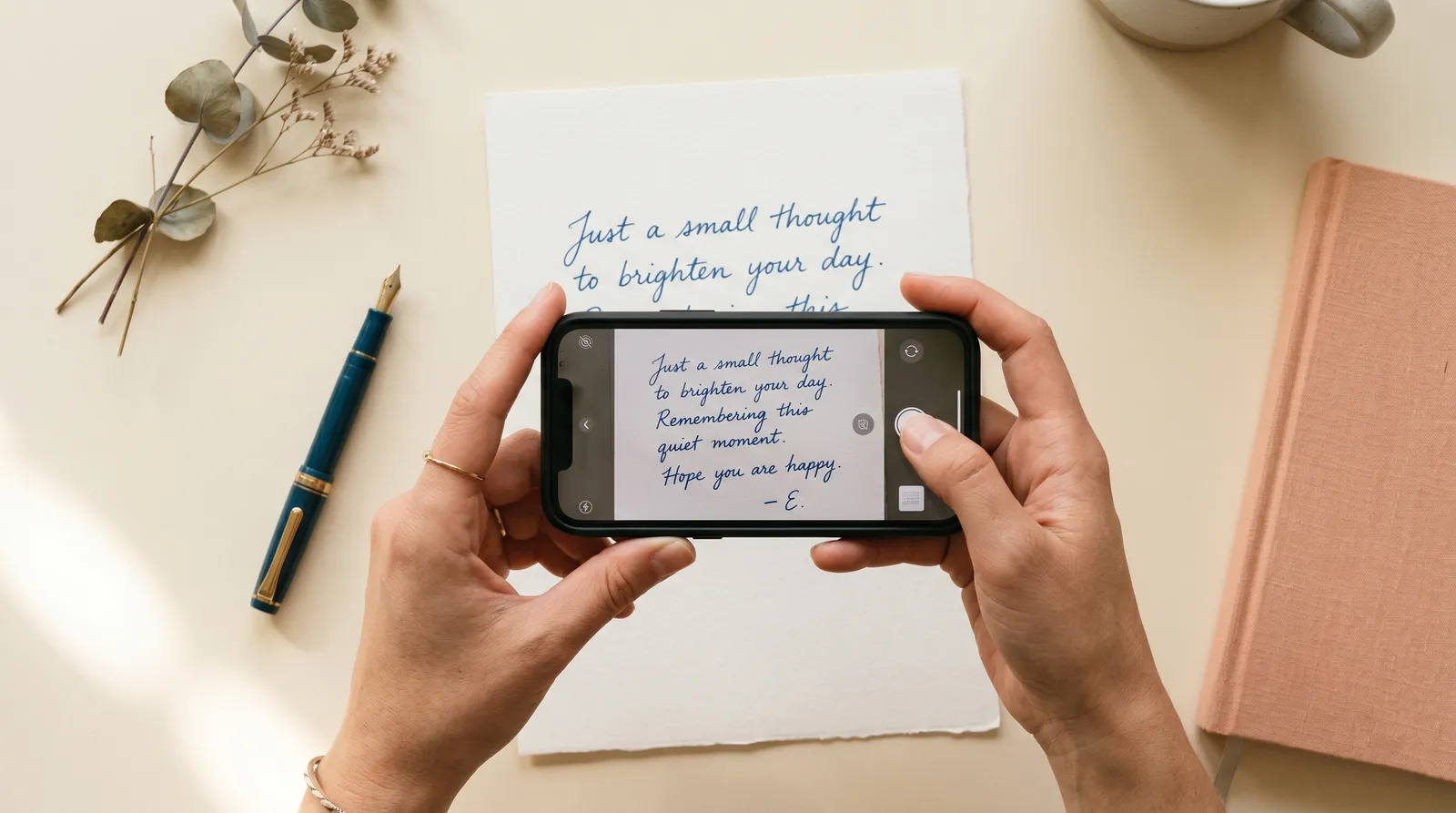
To analyze handwriting from a photo, you need only two things: a clear, evenly lit picture of natural writing, and a short list of what to look for — slant, pressure, size, spacing, the baseline, and the signature. Read each feature in turn, note what stands out, and you have a grounded personality sketch. This guide shows you how to photograph a sample properly, the six features that carry the most meaning, and a worked example you can copy. Prefer to skip the manual work? You can get an instant read with Graphia.
What handwriting analysis actually reads
Graphology is the practice of reading handwriting as a trace of personality. The logic is simple: writing is a fine-motor habit shaped by your brain, so the way you form letters — without thinking about it — leaks information about temperament, mood, and energy. It has a long history in Europe, where it is still used informally in coaching and self-reflection. You can read a neutral overview of its background in Britannica's entry on graphology.
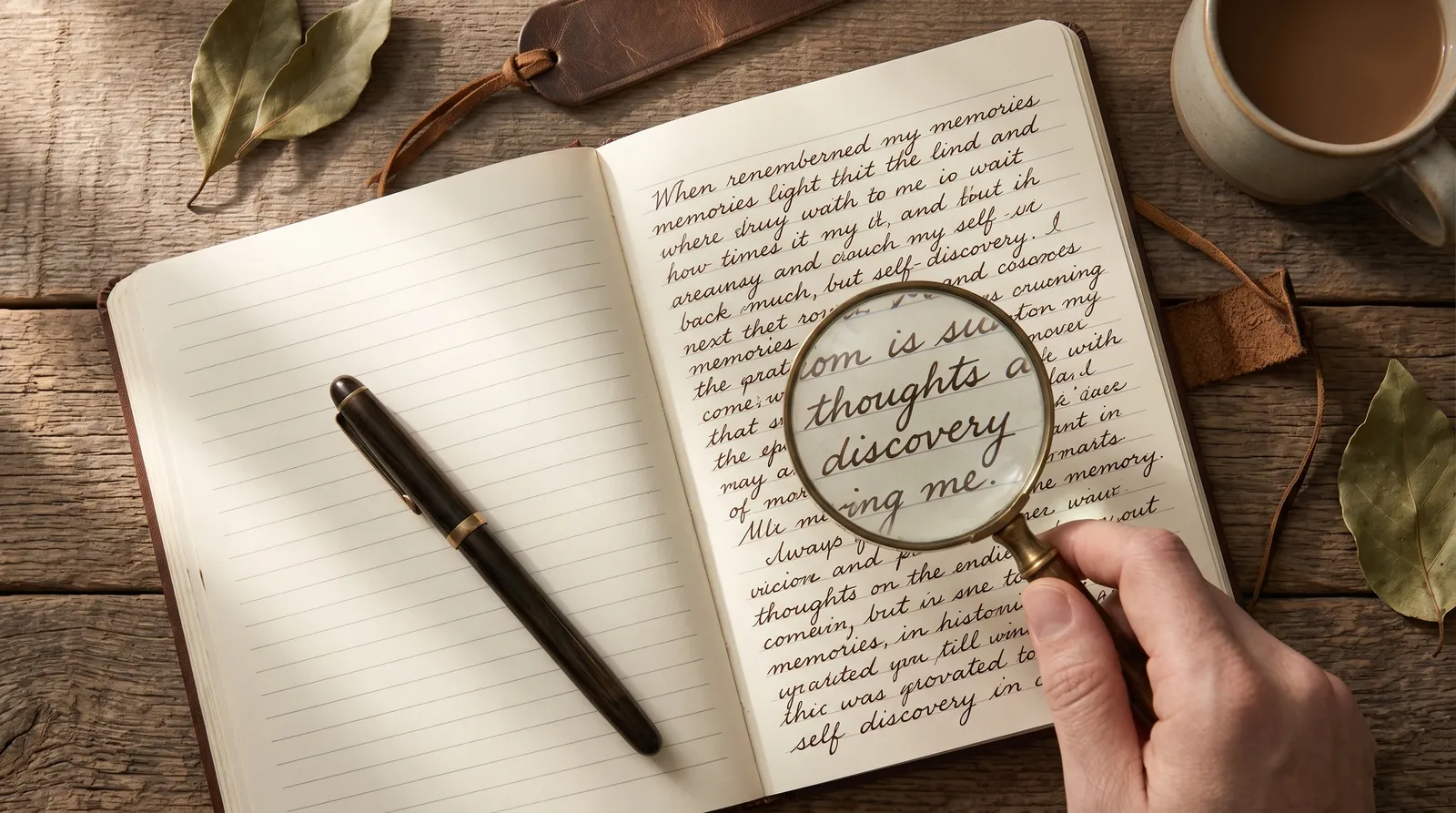
A photo is enough for most of this, provided the writing is legible and natural. You are not grading penmanship — you are looking for habits. Messy, ordinary, everyday writing is far more revealing than a careful copy.
Why should ink reveal anything at all? Because handwriting is sometimes called “brain writing.” By adulthood you no longer think about forming individual letters; the movement is automatic, driven by the same nervous system that carries your temperament and your mood. That is why two people taught the identical school script still end up writing nothing alike, and why your own hand looks different when you are calm, rushed, or worn out.
People reach for handwriting analysis for all sorts of reasons: as a journaling and self-reflection habit, as an icebreaker with friends and partners, or simply out of curiosity about what their everyday scrawl gives away. Whatever the motive, the method below is the same.
How to photograph handwriting for analysis
The reading is only as good as the sample. Before you analyze anything, capture it well:
- Write on unlined paper. Lined paper hides the baseline, one of the six features. Use blank white paper and a normal ballpoint or pen.
- Write enough. Three or four full sentences in your normal hand — not your “best” handwriting. A two-word note won't show spacing or rhythm.
- Add your signature. Sign at the end. The signature is read separately from the body text.
- Light it evenly. Daylight near a window is ideal. Avoid harsh shadows, and don't let your own shadow fall across the page.
- Shoot straight down. Hold the camera parallel to the paper so the letters aren't skewed, and fill the frame with the writing.
- Check the focus. Tap to focus and make sure the strokes are crisp and that light-versus-heavy ink is visible.
A good photo makes pressure, slant, and spacing obvious; a bad one hides them. When in doubt, take the shot again rather than analyze a blurry sample. If you are photographing someone else's writing, get their okay first — it is their personality on the page, after all. A medium ballpoint or gel pen shows pressure best; pencil and fine liners flatten it, and markers bleed and hide the stroke.
Six features you can read from a photo
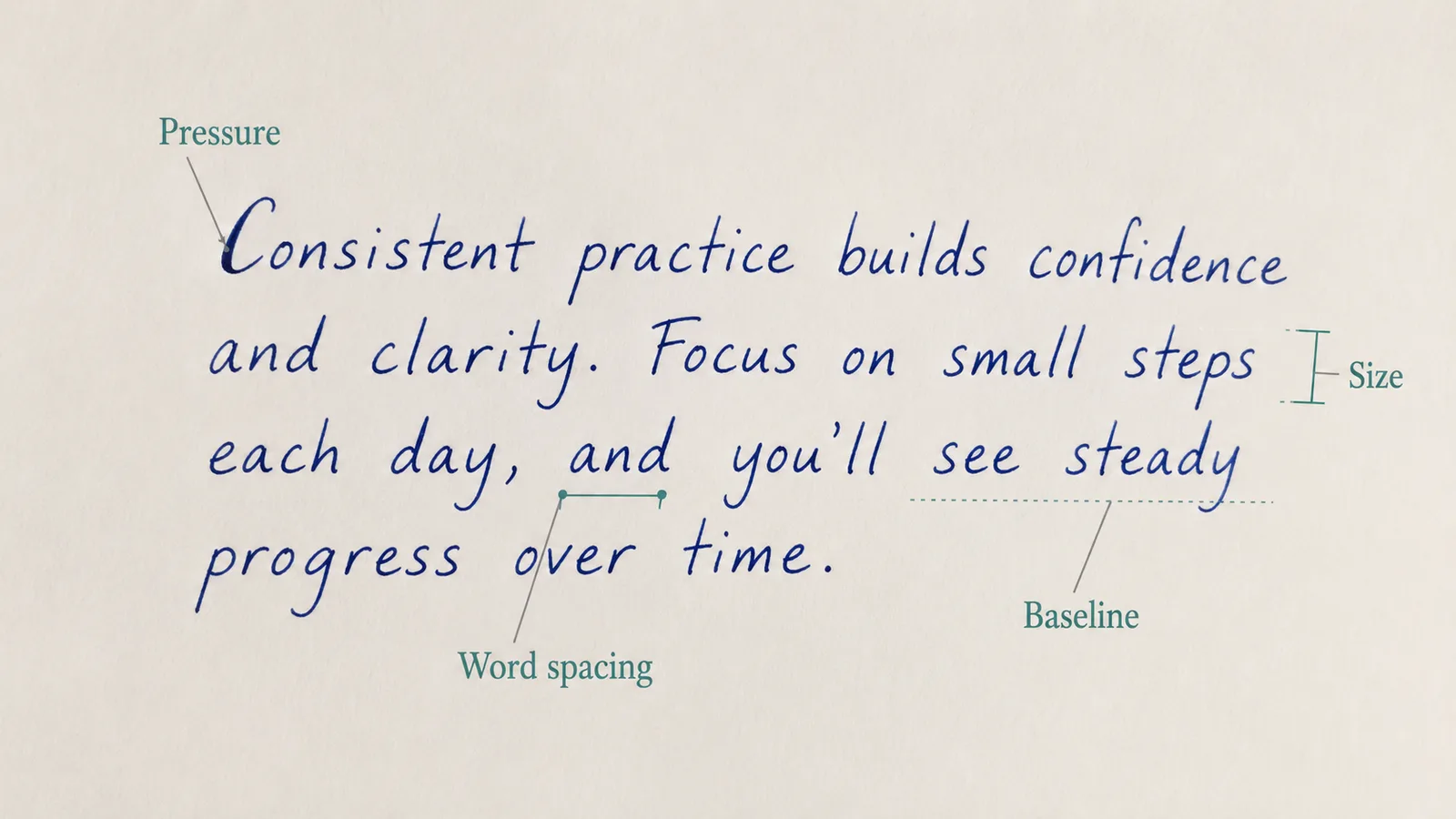
Here is the checklist. For each feature, note what you actually see before deciding what it might mean. Work top to bottom; by the end you will have six quick notes that combine into a portrait.
1. Slant
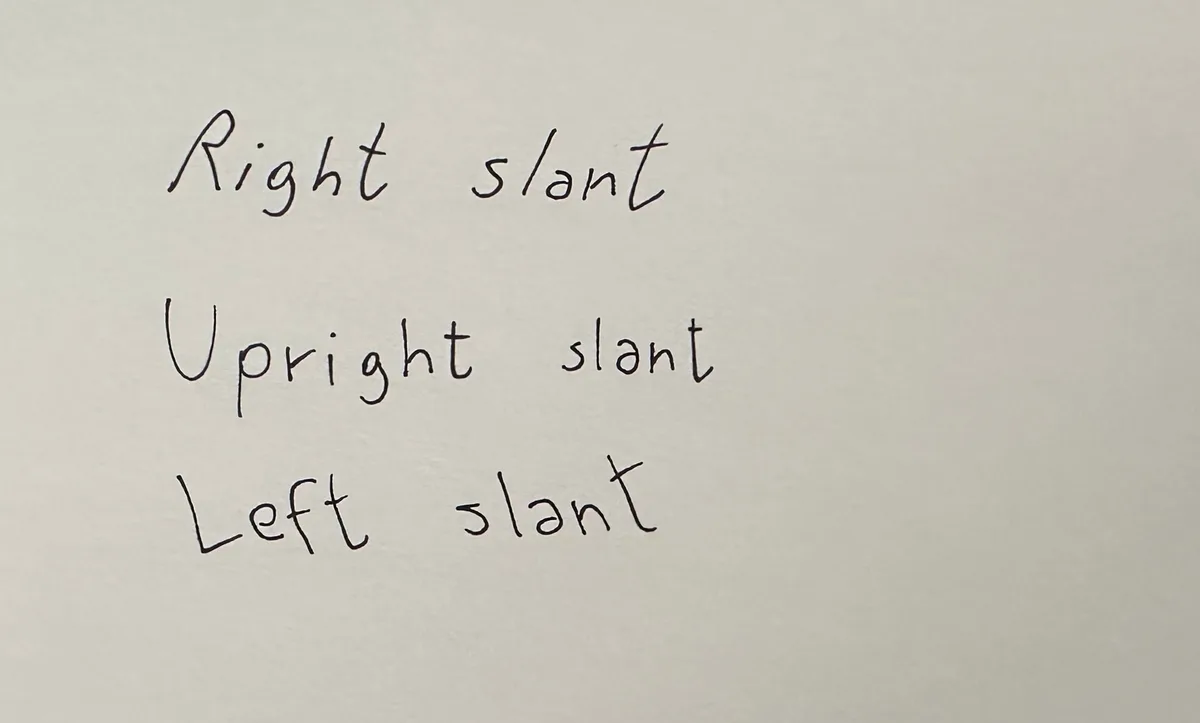
Look at the dominant direction of the upstrokes. A rightward slant is associated with sociability and emotional expressiveness; an upright hand with self-control and head-over-heart decisions; a leftward slant with reserve or self-protection. A slant that changes within the same sample can point to shifting moods. In the photo, sight along the tall letters such as l, h, and t — their lean is clearer than the lowercase bulk.
2. Pressure
Heavy, dark strokes you can almost feel on the back of the page point to intensity, drive, and strong emotional investment. Light pressure suggests sensitivity, adaptability, and lower physical energy. Pressure is the feature most easily lost to a poor photo, so light your sample well. Look for strokes that bite into the paper or show extra-dark ink on the downstrokes; if every line is the same faint grey, your lighting or focus is hiding the detail.
3. Size
Large writing is linked to outgoing, attention-comfortable personalities; small writing to focus, modesty, and the ability to concentrate. Always compare size to the space available — someone who writes small on a big blank page is telling you something different from someone cramped for room. As a rough gauge, the body of an a, e, or o taller than a ballpoint tip counts as large; markedly smaller counts as small.
You can try this on your own handwriting in Graphia — take one photo and it reads all six features at once, then turns them into a personality profile.
4. Spacing
Wide gaps between words suggest a need for space and independence; cramped words suggest a wish for closeness or, sometimes, loose boundaries. Generous space between lines reads as clear thinking, while lines that tangle and collide can indicate a busy or overloaded mind. Hold the page at arm's length: if the words swim together into grey blocks the spacing is tight; if rivers of white run down between them it is wide.
5. Baseline
This is why you wrote on unlined paper. A baseline that rises across the line is associated with optimism and energy; one that sags suggests fatigue or low mood; a wavy baseline points to flexibility, or sometimes inconsistency. Lay a straight edge — or your phone's edge on the screen — under a line to see whether it climbs, holds, or drops.
6. The signature
Your signature is your public face — how you want to be seen, which can differ from the private self in your body text. A signature larger than your normal writing suggests confidence in public; an illegible one, a guarded nature; a signature that matches the rest of your writing, someone whose public and private selves line up. Underlines and full stops add nuance: a firm underline reads as self-reliance and a wish to be noticed, while a heavy stop can signal caution or a need for closure. For a deeper read, see our guide to what your signature reveals about you.
Beyond the big six: small tells
Once the six core features are second nature, a handful of letter-level details add colour:
- The t-bar: a high, firm crossbar suggests ambition and confidence; a faint or low one, hesitation.
- The i-dot: placed precisely and close suggests attention to detail; drifting high or to the right, imagination or impatience.
- Loops: full, rounded loops on letters like l and e point to expressiveness; tight or absent loops to restraint.
- Margins: a wide left margin reads as forward-looking; crowded margins as caution about wasting space, or time.
- Connections: fully joined letters suggest logical, step-by-step thinking; frequent breaks between them, intuition and bursts of insight.
These are accents, not headlines. Note them, then let the big six lead the reading.
A worked example
Say you photograph a short note. The writing slants gently right, sits at a medium size, with even, generous spacing between words and a baseline that lifts slightly toward the end of each line. The pressure is moderate. Read together, that is a picture of someone sociable but composed, comfortable around people, currently in good spirits, and not running on empty. The signature is a touch larger than the body text and fully legible — a person happy to be seen, with little gap between their public and private selves.
None of those is a verdict; they are observations you weigh against everything else on the page. The skill is in combining features, not reading them alone. One rising line means little. A rising baseline plus a right slant plus open spacing tells a far more consistent story.
Now picture the opposite sample: small, upright letters pressed hard into the page, words jammed close together, and a baseline that holds dead level. That reads as a focused, self-contained person with plenty of drive, who keeps feelings in check and prefers people close rather than at arm's length. The same six features, a completely different portrait — which is exactly the point.
Three mistakes that ruin a reading
- Analyzing block capitals. Printing or all-caps masks your natural style. Use everyday cursive or joined writing.
- Reading one feature in isolation. A single trait is a hint, not a conclusion. Always cross-check against the others.
- Treating it as fact. Mood, tiredness, and even the pen change your writing day to day. A reading is a snapshot, not a diagnosis.
Read the same hand more than once
Because handwriting moves with your state of mind, a single sample is just one frame. The real insight comes from comparison. Photograph a few lines on a good day, then again on a draining one, and watch the baseline, pressure, and size shift. Over weeks those small changes track your moods more honestly than memory does, which is why keeping a dated archive of samples is worth the small effort.
What a photo can't tell you
Be honest about the limits. Graphology is a tool for reflection and conversation, not a clinical or medical instrument. Handwriting can hint at your current mood and long-standing temperament, but it cannot diagnose conditions, predict the future, or prove identity. It also can't reliably reveal age, gender, or intelligence, whatever you may read elsewhere. Treat a reading as a prompt for self-curiosity — often uncannily apt, and best held lightly.
One more caveat: the meanings here come from Latin-script graphology. If the writing uses a different alphabet or was learned in a very different school system, the same rules won't map cleanly, so weigh them with extra care.
Analyze your handwriting online in seconds
Reading by hand is the best way to learn the features. But once you know what they mean, an app does the heavy lifting in seconds (not sure which to pick? see how to choose a handwriting analysis app). Graphia performs the same six-feature read from a single photo and scores each one — spacing, size, slant, pressure, baseline, and signature — from 0 to 10 with a short explanation. It then layers on psychological insights such as self-esteem, emotional control, mental clarity, relational openness, and stress, plus a Myers-Briggs-style type, a read of the actual words you wrote, and a small weekly exercise to try. You can save readings in a growth diary to watch your handwriting shift with your mood, compare two samples side by side, or analyze a friend's writing for fun. Available on iPhone and Android, it does in seconds — and in far more depth — what the checklist above teaches you to do by eye. Browse more handwriting guides — including the personality traits your handwriting reveals — as the series grows.