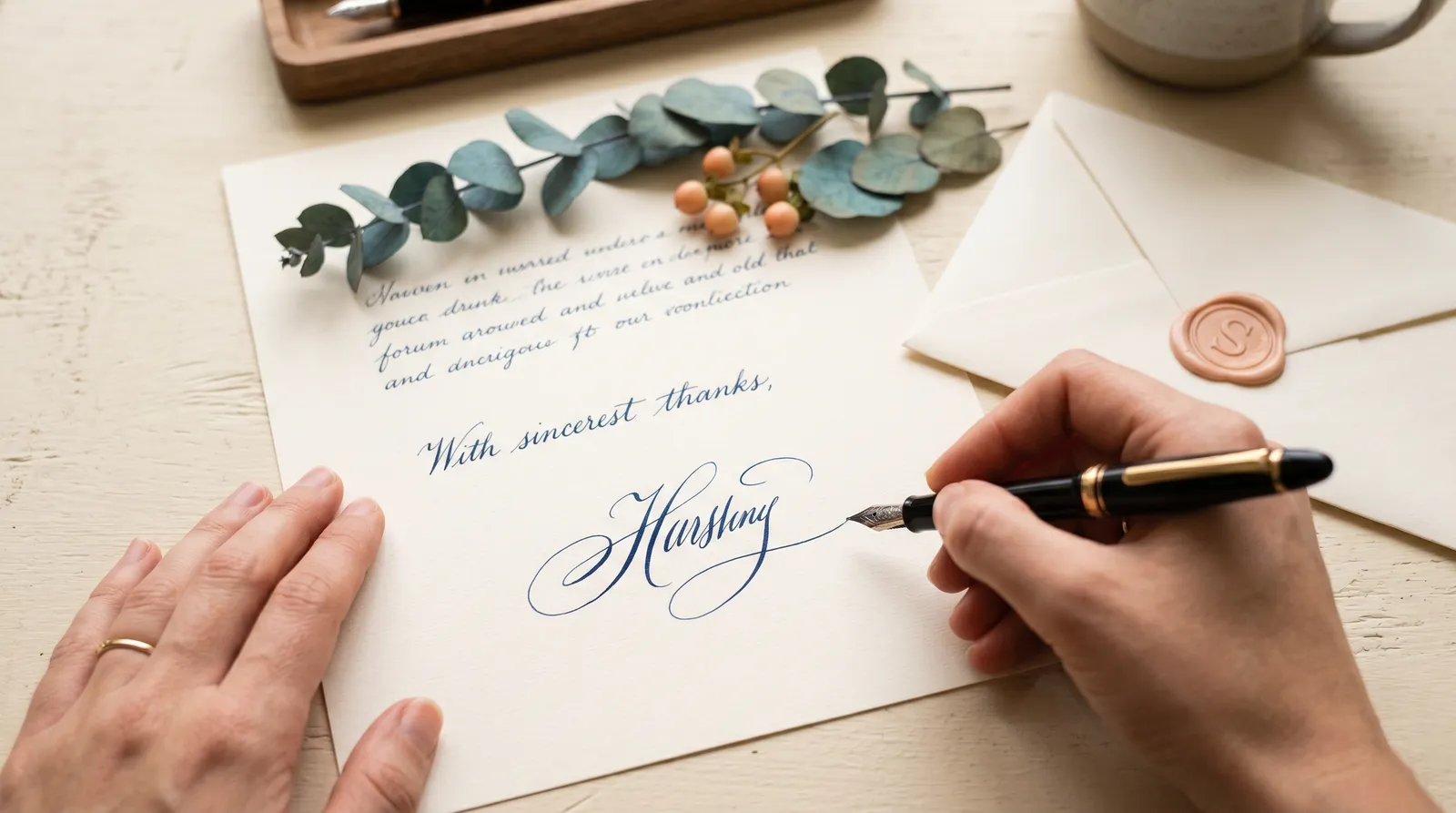
Your signature is the most public thing you write: how you want the world to see you, condensed into a few strokes. Signature analysis reads that performance — the size relative to your normal writing, how legible it is, its slant, any underline or flourish, the size of the capitals, and whether you sign your full name or just initials. Read those together and you get a picture of how someone presents in public, which often differs from their private self. This guide shows you how to read a signature, what common traits suggest, and how to try it on your own with Graphia.
Your signature isn't your handwriting
This is the first thing to understand. Your everyday handwriting is the private you, written without much thought. Your signature is a deliberate, rehearsed symbol of identity — a logo you've designed for yourself over years. Graphologists read the two separately, because they answer different questions: the body text shows who you are, the signature shows who you want to be seen as.
Think of it as exactly that — a logo you refined over time. The first time you signed your name, probably as a teenager, you experimented until something felt like “you,” and then it set. That is why it stays so stable, and why a deliberate change to it — after a marriage, a new job, a fresh start — so often tracks a real shift in how you see yourself.
That everyday writing has its own story — see our guide to analyzing handwriting from a photo — but here we focus on the signature alone. The gap between the two is itself revealing: when your signature looks just like your normal writing, your public and private selves line up; when it's wildly different, there's a persona you put on for the world.
How to capture your signature for analysis
As with handwriting, the reading is only as good as the sample. Before you analyze anything:
- Sign on plain, unlined paper at your natural speed — don't slow down to make it neat, or you'll lose your real signature.
- Sign as you normally would on a card, not how you'd carefully sign a contract. Context changes the signature, so capture the everyday version.
- Add a line of normal handwriting above it. You'll want to compare the signature's size and slant against your ordinary writing.
- Photograph it straight on in even light, filling the frame, with the strokes in focus so pressure and flourishes are visible.
A clean capture makes size, slant, and the underline obvious; a rushed phone snap in poor light hides exactly the details you want.
How to read a signature: seven things to look at
Work through this checklist. For each point, note what you actually see before deciding what it might mean.
1. Size relative to your handwriting
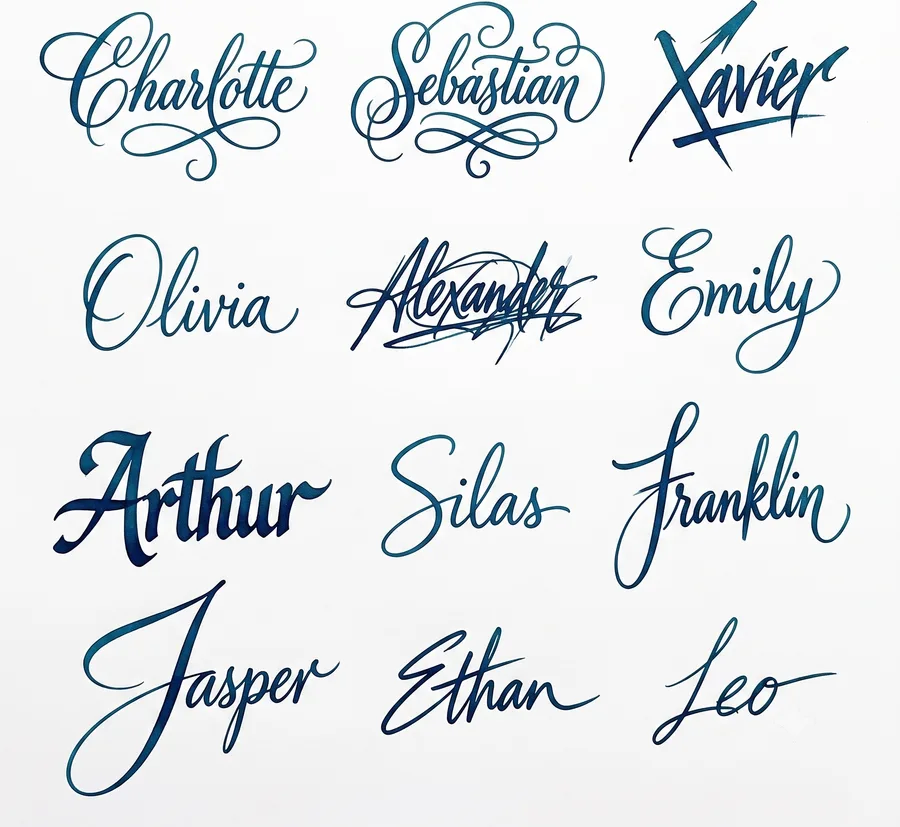
Compare the signature to the text above it. A signature larger than your normal writing suggests confidence and a comfort with being noticed; one the same size or smaller suggests modesty or a wish not to stand out. An oversized signature on a small note is someone who likes to make an impression. The quickest tell in a photo is to lay the signature beside a line of your ordinary writing and compare the capital heights. Public figures who court attention tend to sign large; people who dislike the spotlight keep it small and contained.
2. Legibility
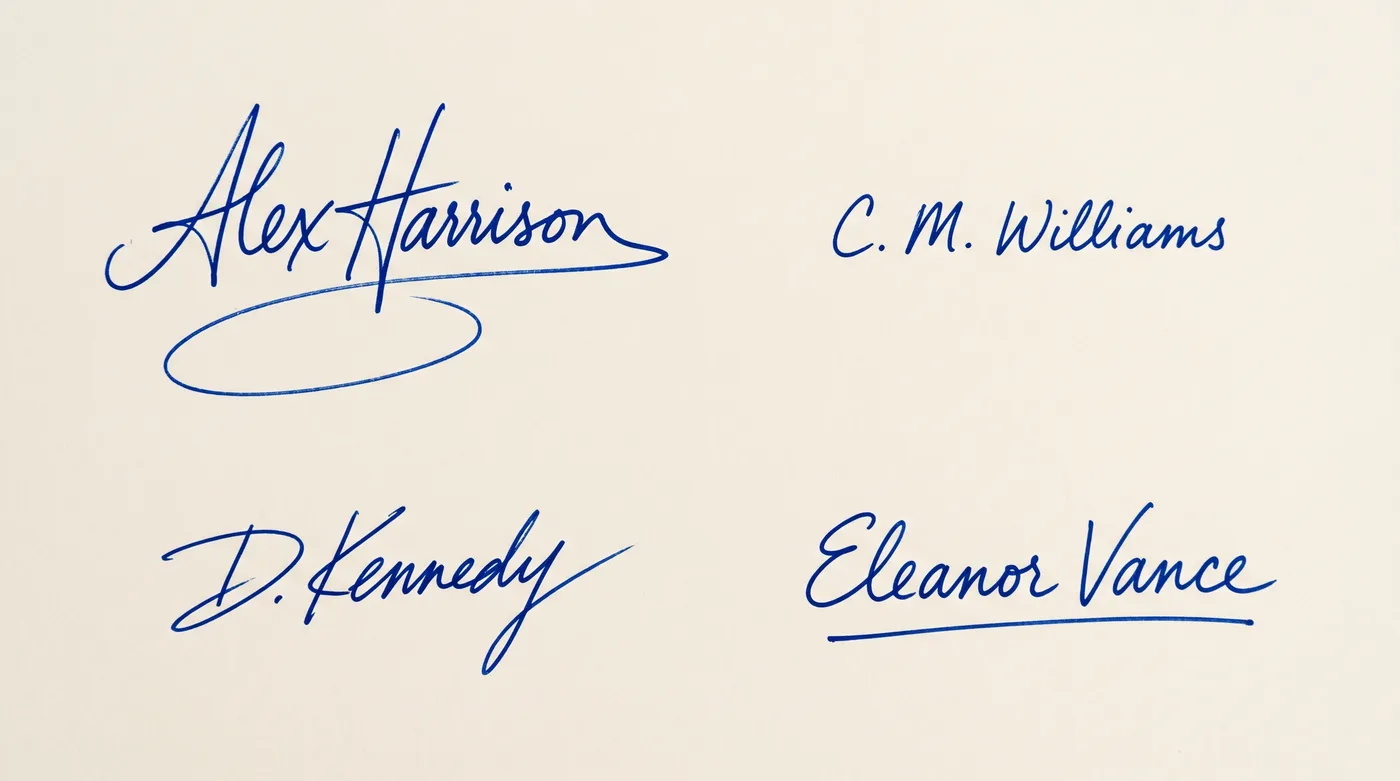
Can a stranger read your name? A clear, legible signature signals openness and a person comfortable being known as they are. An illegible scrawl points to privacy, speed, or a guarded public face — and it's common in people who sign dozens of times a day, where the name has worn down to a gesture. A useful test: hand the page to someone who doesn't know your name and see if they can read it. As a rule, the more often you sign, the more your signature drifts toward speed over clarity, so weigh legibility against how much signing the person actually does.
3. Slant
As with handwriting, a rightward slant leans toward warmth and sociability, an upright signature toward self-control, and a leftward slant toward reserve. Sight along the tall strokes to judge it. Watch especially for a signature that slants differently from the body text: a right-leaning signature over upright writing can mean someone who is warmer in public than in private.
4. The underline and flourishes
A firm underline beneath the signature reads as self-reliance, confidence, and a desire to be noticed and remembered; a double underline doubles down on that need for recognition. Elaborate loops and flourishes suggest someone who enjoys display; a plain signature with no embellishment suggests someone who lets the work speak. A line struck through the name, by contrast, can signal self-criticism.
You can try this on your own signature in Graphia — snap a photo and it reads size, legibility, slant, and flourish at once, then explains what each projects.
5. Capital letters
Look at the initial capitals of your first and last name, and compare their height to the lowercase letters that follow. Large, prominent capitals point to pride and a strong sense of self; modest capitals to humility. A first-name capital much larger than the surname capital can suggest someone who foregrounds their personal identity over their family or professional one.
6. First name vs surname emphasis
Which name dominates? A bigger, bolder first name suggests someone who leads with the personal, informal self. A dominant surname leans toward formality, professional identity, or family pride. Equal weight suggests a balance between the two — someone who carries their personal and public roles with the same ease.
7. Full name vs initials
Signing your full name openly suggests you're comfortable being fully identified. Initials, or a first name with an initial for the surname, point to privacy or a desire to keep part of yourself back. A signature that spells out the first name but abbreviates the surname keeps the family identity private while staying personable. People who sign only initials often value efficiency and keep a certain distance.
Smaller details that add nuance
Once the seven basics are second nature, a few finer points add colour:
- A dot or period after the name: a sense of finality and decisiveness, sometimes caution or a need for closure.
- A signature that rises toward the end: optimism and ambition; one that sinks suggests fatigue or low spirits in the moment.
- Encircling the whole signature: a wish for self-protection, or to keep the world at a little distance.
- The gap between text and signature: a wide gap can suggest distance between the person and what they've written or agreed to; a signature tucked close to the text, full ownership of it.
- A growing or shrinking signature over the years: often mirrors rising confidence or a quieter, more private phase of life.
These are accents, not headlines. Note them, but let the seven basics lead the reading.
Reading a signature in practice
Say someone signs with a large, mostly legible first name, a tall opening capital, a quick underline, and a surname that trails into a faint scribble. Read together, that's a person who leads with their personal identity, is happy to be seen and remembered, and keeps the more formal or family side a little private. The underline adds confidence; the legible first name adds openness.
Now picture the opposite: small, fully legible, upright, no underline, full name spelled out. That reads as someone modest, precise, and content to be known exactly as they are, with little gap between the public and private self. A third person signs an illegible, racing scrawl with a bold encircling loop — fiercely private, quick-moving, and protective of their inner world even while signing in plain sight. None of these is a verdict — each is a starting point you would confirm against the person's everyday handwriting and against how their signature shifts from one day, or one decade, to the next.
As always, the skill is in combining the features, not reading any one alone. An underline by itself means little; an underline plus an oversized first name plus a flourish tells a far more consistent story about someone who enjoys being noticed.
Why we read so much into a signature
There's a reason a signature feels weightier than other writing. Signing your name is an act of commitment — it closes a contract, accepts a gift, ends a letter. That is part of why a form asks for a signature rather than a checkbox: putting your name to something deepens your sense of ownership of it. Your signature carries that psychological charge, and the way you perform it — boldly, quickly, privately, with a flourish or without — is a small ritual of how you step forward and put your name to things. That's why even people who claim not to care about handwriting are often curious about their own signature.
What a signature can't tell you
Be honest about the limits. Reading a signature for personality is a tool for reflection and conversation — it is not forensic document examination, and it cannot detect forgery, verify identity, or diagnose anything. It also shifts with context: you sign differently on a contract than on a birthday card, and a signature changes over a lifetime as your sense of self changes. A single sample is a snapshot of one moment, not a fixed verdict. Treat a reading as a prompt for curiosity, and hold it lightly. The interpretations here come from graphology for the Latin alphabet; other scripts and signing conventions won't map cleanly, so weigh them with extra care.
Signature personality test: a two-minute self-check
If you want a quick signature personality test before reading the detail above, sign your name three times on plain paper, pick the one that looks most like your everyday signature, and answer these six questions. Count how many times you answer "yes".
- Is it larger than your normal handwriting? Yes points to a public self that is bigger and bolder than the private one.
- Can a stranger read your name? Yes points to openness and a wish to be understood; no points to privacy or speed.
- Does it lean to the right? Yes points to warmth and forward momentum; upright or leftward leans point to reserve and self-control.
- Is there an underline or a flourish? Yes points to confidence and a taste for being noticed.
- Are the capitals clearly bigger than the rest? Yes points to pride in the name and comfort with authority.
- Do you sign your full name rather than initials? Yes points to directness and a willingness to stand behind what you sign.
Four or more "yes" answers describe an outward, confident public persona. Two or fewer describe someone who keeps their public face small and controlled. Three is the mixed middle most people land in. Treat the score as a conversation starter, not a verdict: a signature changes with the pen, the paper and the mood of the day.
What does your signature say about you? Quick answers
These are the questions people ask most often about their own signature, with the short version of what graphology reads into each one.
- An illegible signature says you value privacy, sign in a hurry, or both. It is common in people who sign many times a day.
- An underlined signature says you are self-reliant and want to be remembered. A long, firm underline is the strongest form of this.
- A signature much bigger than your handwriting says your public persona is larger than your private self. The reverse, a tiny signature, says you would rather not be the centre of attention.
- Signing with initials only says you keep something back, and often that you value efficiency over warmth.
- A signature that rises to the right says optimism and ambition. One that sinks says fatigue or discouragement at the time of signing.
- A full stop after your signature says you like closure and prefer to have the last word.
- A signature that changes all the time says your sense of self is still settling, which is normal in your teens and twenties, or that you adapt your public face to the audience.
None of these signs stands alone. Read two or three together and against the person's ordinary handwriting, and the picture becomes far more reliable than any single mark.
AI signature analysis: what it adds
AI signature analysis applies the same checklist you just learned, but reads it from an image in seconds. Computer vision measures what the eye can only estimate — the exact size ratio between signature and body text, the slant angle of the strokes, the darkness of the ink as a proxy for pressure, whether an underline or flourish is present — and maps those measurements onto the interpretations above. The result is faster and more consistent than a manual reading: the same signature gets the same scores every time, with none of the flattering rounding we all do when reading our own name.
It has limits worth knowing. AI reads the ink, not the person — it can't see the context of a signing, and like any graphology-based read it remains a tool for reflection, not verification or forensics. Treat an AI report the way you'd treat your own checklist notes: a fast, structured starting point to sanity-check against the person's everyday handwriting. A good free AI signature analysis is exactly that — free to try, clear about what each score means, and honest about being for insight and fun rather than judgment.
Analyze your signature online in seconds
Reading by eye is the best way to learn what each feature means. Once you know them, an app does it instantly (here's how to choose a handwriting analysis app). Graphia includes a dedicated signature analysis: photograph your signature and it scores how you project yourself in public — reading size, legibility, slant, and flourish — on a 0 to 10 scale with a short explanation, then folds that into a fuller personality profile alongside your everyday handwriting. You can compare your signature today with one from years ago, save readings in a growth diary to watch it evolve, or analyze a friend's signature for fun. Because it reads the signature alongside your body text, it can also surface the gap between your public and private selves — the very thing hardest to judge by eye. Available on iPhone and Android, it turns a single photo into a clear read of your public face. Browse more handwriting and signature guides — like the personality traits your handwriting reveals — as the series grows.