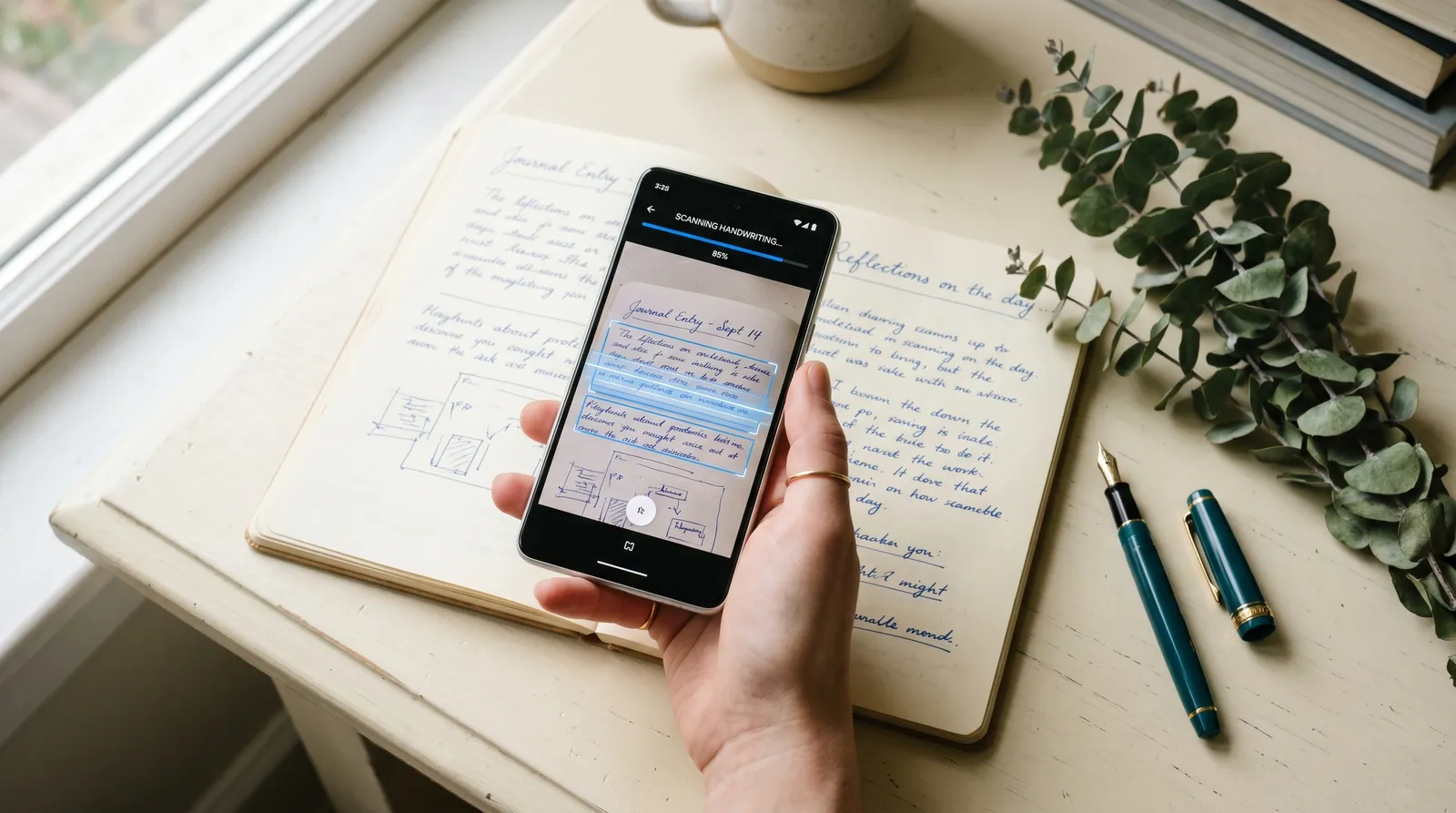
A handwriting analysis app turns a photo of your handwriting into a personality read — in seconds, on your phone. Instead of learning graphology yourself or booking a human analyst, you snap a picture and the app scores the same features an expert would: size, slant, pressure, spacing, the baseline, and your signature. This guide explains what these apps actually do, how AI changed them, exactly what to look for before you pick one, and how doing handwriting analysis online compares to a dedicated app. You can also just try it now with Graphia.
What a handwriting analysis app actually does
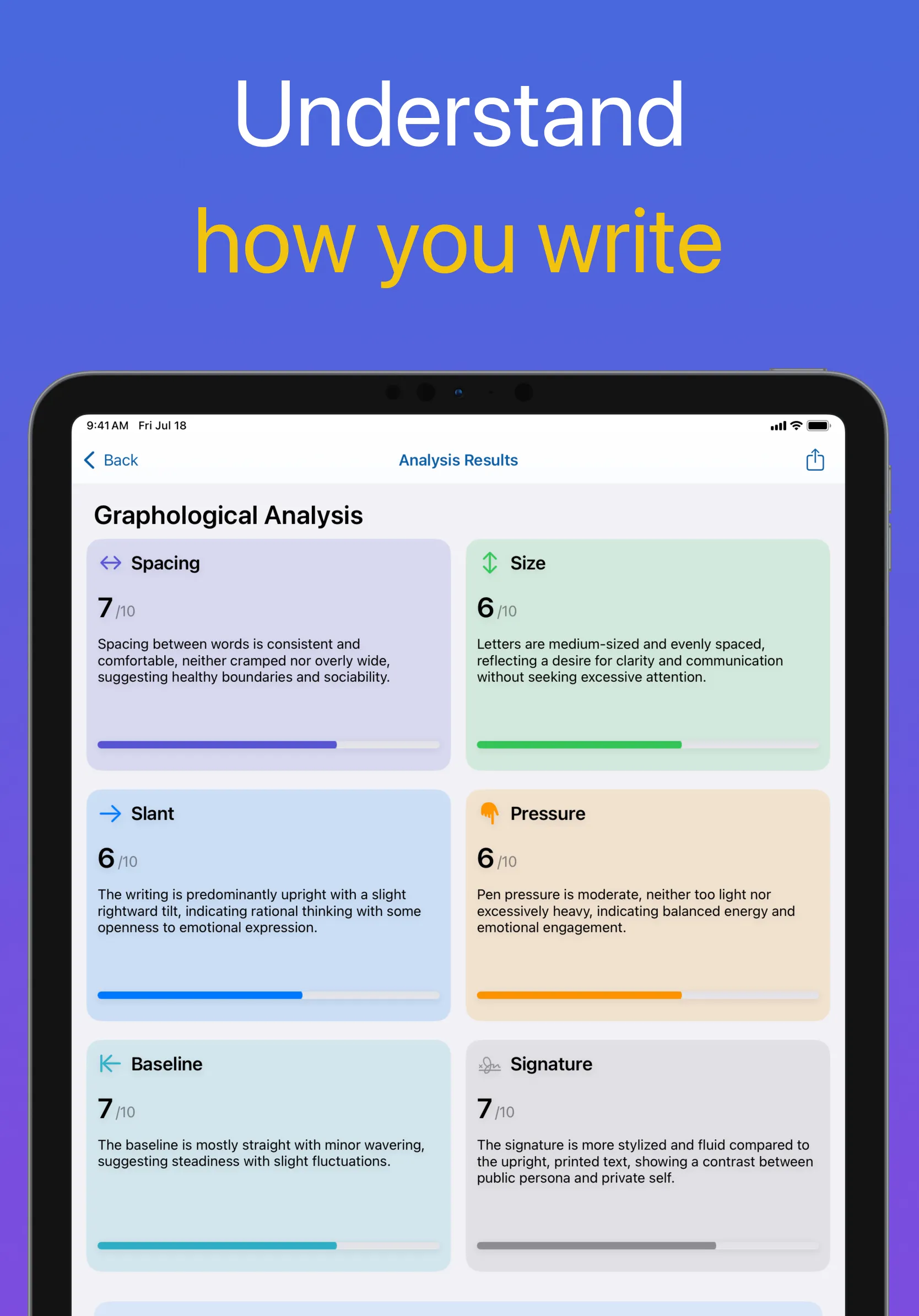
At its core, the job is simple: read the habits in your writing and translate them into plain-language insight. A good app works in three steps. First it captures a clear photo of natural handwriting. Then it reads the core features — the same six a graphologist checks, which we cover in detail in our guide to analyzing handwriting from a photo. Finally it turns those features into a profile: personality traits, a read of your current mood, often a Myers-Briggs–style type, and a separate look at your signature. None of this requires you to know what a t-bar or a baseline is; the app does the looking and hands you the conclusions in plain language.
The difference between a shallow app and a useful one is what happens in that last step. A weak tool spits out a single label. A strong one explains why — connecting a rising baseline to optimism, heavy pressure to drive, wide spacing to a need for independence — so the result teaches you something instead of just labelling you. If you want to know which traits map to which signs, our guide to what your handwriting reveals about your personality breaks them down.
The output usually looks like a scorecard plus prose: each feature rated, a few short paragraphs of interpretation, and a headline takeaway. The better apps let you keep those reports, so a single curious photo can become an ongoing record of how your writing — and your mood — changes. That shift from one-off novelty to something you return to is what separates a toy from a tool.
How AI changed handwriting analysis
Reading handwriting by hand takes practice, and booking a human graphologist is slow and rarely cheap. AI collapsed both problems. Computer vision picks out the strokes, slant, and pressure from a single photo, and a language model turns those measurements into a written profile in seconds — the same read, every time, without the inconsistency of a tired human eye.
It's worth being clear about what that does and doesn't mean. AI handwriting analysis is faster and far more consistent than the manual method, and it never gets bored halfway down the page. It is not, however, more scientific: graphology remains a tool for reflection and entertainment, whoever — or whatever — is doing the reading. The win is access and speed, not a new claim to accuracy.
It also widened who can use it. A decade ago, getting your handwriting read meant finding a specialist; now it's a free download and a photo. That accessibility is the real story — millions of people who'd never have booked an analyst can get a thoughtful read in the time it takes to write a few lines. Whether you treat that as a party trick or a journaling habit is entirely up to you.
It helps to see the three options side by side. Reading your own handwriting is free and educational, but takes real practice to do well. A human graphologist brings nuance and a conversation, but costs money and time and isn't available at eleven at night. An app sits in between: instant, consistent, always on, and cheap — at the price of a human's intuition for the unusual case. For most people who are simply curious, that's an easy trade.
What to look for in a handwriting analysis app
Not all of them do the same job. Before you settle on one, run down this checklist:
- Works from a photo. You should be able to point your camera at any handwriting and get a read — no typing, no tracing.
- Reads the core features. Size, slant, pressure, spacing, baseline, and signature. If it ignores most of these, it isn't really analysing handwriting.
- Goes beyond a single label. Look for psychological insight, a mood or stress read, and a personality type — with explanations, not just a verdict.
- Includes signature analysis. Your signature is read separately as your public face; a complete app covers it. (More on what your signature reveals.)
- Lets you compare and track over time. The real insight comes from watching your writing shift with your mood, or comparing two samples.
- Frames it honestly. Good apps present graphology as reflection and fun, never as clinical diagnosis or a hiring tool.
- Respects your privacy. Check how your photos are handled and stored before you upload anything personal.
- Runs on your platform. Make sure it's available for your phone — iOS, Android, or both.
How to get the best read from any app
Whatever app you choose, the quality of the reading rests on the photo you feed it. A few habits make a big difference:
- Use unlined paper so the app can see your natural baseline.
- Write naturally — a few relaxed sentences in your everyday hand, not your neatest copybook script.
- Light it evenly and shoot straight down, filling the frame, so pressure and slant stay visible.
- Add your signature at the end if you want the public-self read too.
Garbage in, garbage out applies here as much as anywhere: the smartest app in the world can't read a blurry, badly lit photo of block capitals. Our photo guide covers the capture step in full.
Handwriting analysis online vs. an app
Search for handwriting analysis online and you'll find browser-based tools alongside apps. Web tools are handy for a quick, no-install look, but they have real limits: you usually have to upload a file rather than shoot a photo on the spot, the reading tends to be thinner, and there's rarely a way to save results or track changes over time.
An app has the camera in your hand, so capturing a clean, well-lit sample is effortless — and capture quality is the single biggest factor in a good read. Apps also keep a history, so your readings become a record you can revisit rather than a one-off. For a quick curiosity, a website is fine; for anything you want to keep, learn from, or share, an app wins. The good news is the best apps are free to download, so trying one costs nothing.
There's a trust angle too: with an app you can see exactly how your photos are handled, while a random web tool may give you less control over what happens to an image of your private journal. If the writing you're analysing is personal, that matters.
You can read your own handwriting with Graphia right now — one photo and it reads every feature at once.
Where Graphia fits
Graphia is an AI handwriting analysis app for iPhone and Android, built around exactly the checklist above. You photograph your handwriting and it scores each feature — size, slant, pressure, spacing, baseline, and signature — from 0 to 10 with a short explanation. On top of that it adds psychological insights (self-esteem, emotional control, mental clarity, relational openness, and stress), a read of the words you actually wrote, a Myers-Briggs–style type, and a dedicated signature analysis.
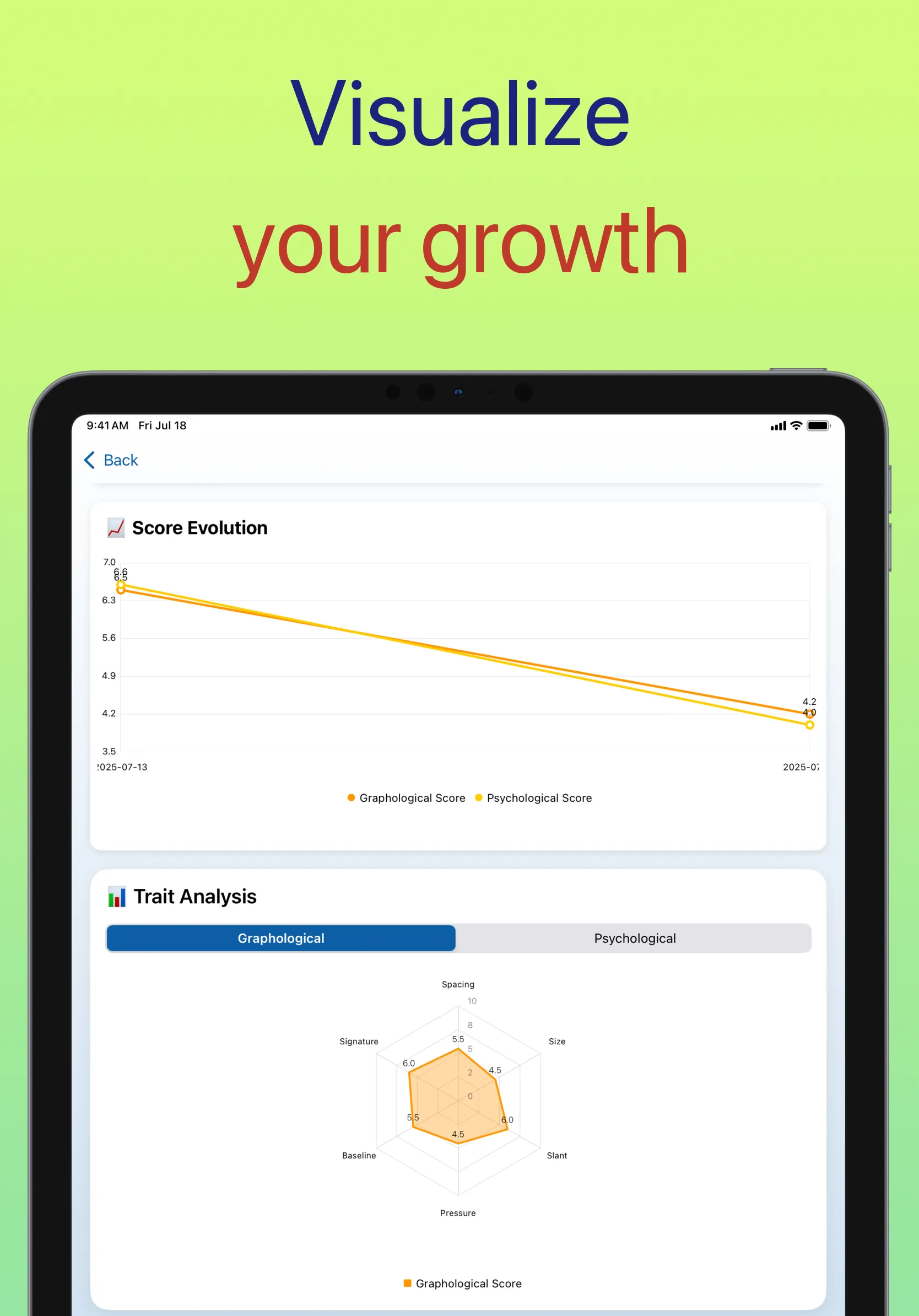
Beyond a one-off reading, a Personal Growth Diary saves your analyses so you can watch your handwriting shift with your mood; Handwriting Comparison puts two samples side by side; Friend Mode reads someone else's writing with their permission; and there's a playful, roast-style Nasty Mode when you want the brutal version. It's free to download on both the App Store and Google Play.
The aim isn't to replace your own eye — it's to do in seconds what the manual method takes practice to do, and to keep a tidy history so the readings add up to something over time.
Who reaches for a handwriting analysis app
The audience is broader than you'd think. Some people use one for self-discovery — a low-effort nudge to reflect on how they're doing. Others treat it as a journaling companion, photographing a page now and then to track their mood over months. Couples and friends use it as an icebreaker, reading each other's writing for fun. And plenty simply arrive curious, having wondered for years what their messy scrawl says about them. None of them need to take the result too seriously to get something out of it — which is rather the point.
An app vs. a personality quiz
Most personality quizzes ask you to rate yourself across dozens of questions — and people tend to answer as the person they'd like to be. A handwriting analysis app skips the self-report: you just write, and the habits surface on their own. It isn't more scientific than a well-built questionnaire, but it reads something you're not consciously curating, which is why the results often feel uncannily personal. Pair an app with a traditional test and you get two angles on the same person — the one you described, and the one you simply revealed.
How much does a handwriting analysis app cost?
Most handwriting analysis apps are free to download and read your first sample at no charge, then ask you to pay for depth — extra readings, the full psychological breakdown, comparison and history tools, or an ad-free experience — through a one-off purchase or a small subscription. A handful are entirely free but lean heavily on ads. The smart move is to let the free read do the judging for you: if the no-cost version already explains why a feature means what it does, the paid tier is usually worth it; if the free read is a single vague label, paying for more of the same won't help. Watch for apps that paywall the basic result outright, or auto-renew a pricey subscription the moment a short trial ends. Graphia is free to download on both the App Store and Google Play, so you can judge the quality of a full read before deciding whether to go deeper.
What these apps can't do
Be clear-eyed about the limits. A handwriting analysis app is for self-reflection, curiosity, and entertainment — not for diagnosing anyone, screening job candidates, detecting forgery, or proving identity. Handwriting shifts with mood, tiredness, and even the pen, so any reading is a snapshot rather than a fixed verdict, and the interpretations come from graphology for the Latin alphabet, so other scripts won't map cleanly.
One thing to watch for when choosing: any app that promises to reveal your IQ, diagnose a condition, or guarantee it can spot a liar from their handwriting is overselling. Those claims aren't supported, and they signal an app that values hype over honesty. A trustworthy handwriting analysis app is upfront that it offers insight and entertainment, not science — and it's more fun precisely because it isn't pretending.
Held lightly, though, a good app is a genuinely fun and surprisingly thoughtful mirror. Browse more handwriting guides to go deeper.